WhitePaper – Memory and Context
Most AI assistants are still reactive: they can answer a question, summarize an email, create a task, or call a tool. But after that, much of the useful context is gone.
I’ve published the current whitepaper here. Skip this and read current version: https://docs.google.com/document/d/1MNddX6o89HpGYiXkXWTX6y83ymohCT1gdctbmM8Ocik/edit?tab=t.0
This is a problem for real work agents. A work agent should understand more than the command. When a user says “follow up with him tomorrow,” the agent needs to know who “him” is, what the topic was, and how the user usually communicates.
That is why memory matters.
But memory should not mean storing everything forever. That creates noise and risk. A useful memory system must know what is worth remembering, how reliable it is, and when it becomes outdated.
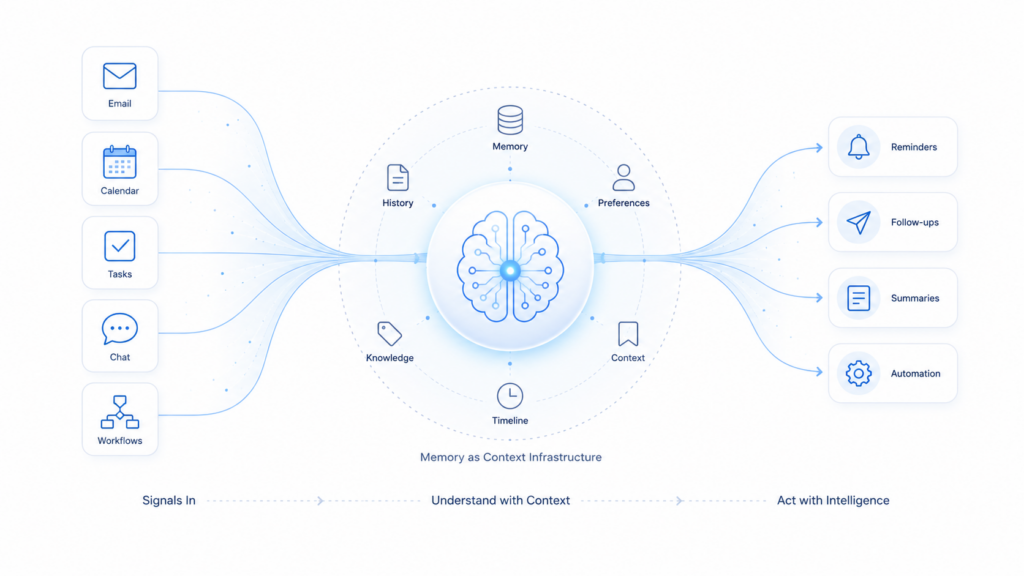
At Actor, we see memory as context infrastructure for autonomous work.
It helps the assistant act better across email, calendar, tasks, and workflows. It can improve drafts, reminders, follow-ups, daily briefs, and automations.
For example, Actor may learn that investor meetings need preparation, finance emails need special attention, or WhatsApp should only be used for urgent reminders.
Then comes the big problem: trust. An agent must know the difference between a confirmed preference, a recent pattern, and a weak assumption. It should also explain why it used a certain memory.
The best agents will not remember everything, but the right things, at the right time, with the right level of confidence.
Feel free to read, share, or use it if it’s useful.
I’d be happy to discuss the topic further, exchange ideas, or provide a reference if it helps with your own work.
Connect on Linkedin Alex Rada